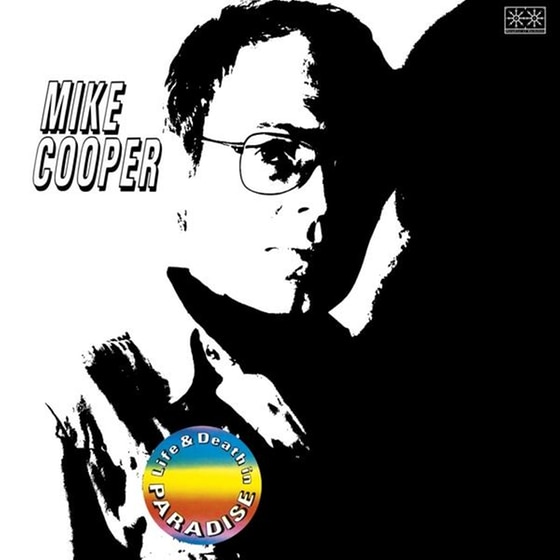
Life And Death In Paradise+Milan Live Acoustic 2

37 ,89€

Δες όλα τα χαρακτηριστικά
Life And Death In Paradise+Milan Live Acoustic 2
ΚΩΔΙΚΟΣ: 1821058
37 ,89€
Επιλογές παράδοσης
Βάλε ΤΚ
Σε BOX NOW Locker Πεμ 21/05 - Τρι 26/05
2,00€
ή ΔΩΡΕΑΝ με Public+ delivery
Σε κατάστημα Public
ΔΩΡΕΑΝ
Στον χώρο σου Πεμ 21/05 - Τρι 26/05
Άτοκες δόσεις με ή χωρίς πιστωτική
Αναλυτική Περιγραφή
Mike Cooper wrote his final songwriter record, a suite of gloaming glam-rock anthems performed with a spiritual jazz trio,
while living on the Costa Tropical of Granada, Spain, an era when he was considering retiring from music altogether. A chance
encounter and a last-ditch record deal convinced him to make one last album, which he recorded in 1974 at Pathway Studios in
London, with “The Greatest Rock and Roll Band in the World,” featuring the inventive South African jazz rhythm section of
Louis Moholo and Harry Miller with UK saxophonist Mike Osborne.
This first-ever reissue includes a bonus CD of Milan Live Acoustic 2018, a previously unreleased solo set that represents
Cooper’s return, after forty-four years pursuing free improvisation and electronics, to a new, deconstructed approach to singing,
steel guitar, and songcraft.
The deluxe LP+CD edition also features a six-panel insert with additional artwork and an essay by the artist about both
records. The deluxe 2xCD gatefold edition features an eight-panel version of the same insert.In the wake of his magisterial triptych of early 1970s avant-folk-rock records—Trout Steel (1970), Places I Know (1971), and
The Machine Gun Co. (1972) (all previously reissued by Paradise of Bachelors)—the British songwriter, guitarist, and fledgling
improviser Mike Cooper retreated to the Costa Tropical of Granada, Spain. With no prospects for touring or recording again,
his fiery band the Machine Gun Co. had disintegrated. Cooper sets the scene in his liner notes of the first-ever reissue of his
unjustly forgotten next album Life and Death in Paradise (1974):
No one came running with offers of fame and riches, and we fell apart, and I left the country and headed for the beach,
disillusioned and a bit disorientated musically. I went to Almuñécar in Andalusia, a place I had been going since 1969, because
a painter friend from Reading, Rowland Fade—who made the collage in the gatefold of my earlier album Trout Steel—had
moved there in 1968.
It was not exactly a paradise. Palm trees were not native there, so they had been imported by the mayor, purchased from his
brother who, legend has it, sourced them from Cuba.
It was in this synthetic coastal “paradise,” unmoored and adrift, considering retiring from music altogether, that he began
tentatively writing new songs.
Time passed slowly in Almuñécar, and I made leather bags, painted the insides of empty swimming pools, attempted to sell some
of my artworks at a market in Málaga, and generally hung out drinking and smoking (cigarettes) at the beachside bars.
A chance encounter with producer Tony Hall, who offered Cooper a last-ditch record deal on Hall’s nascent Fresh Air label,
convinced him to make one last album—with the stipulation that he could assemble what he called “The Greatest Rock and
Roll Band in the World.”
I told Tony that I would do it if I could hire some of my South African jazz musician friends that I had used on my Pye/Dawn
albums and some friends from Reading that I still knew and admired. Tony loved jazz and was more than happy for me to use
whomever I wanted. I called up Harry Miller, Louis Moholo, and Mike Osborne, who were in fact a trio at the time … and several
local Reading heroes, including the singer-songwriter Terry Clarke.
The result, recorded live with minimal overdubbing at Pathway Studios in London, was Life and Death in Paradise, an
utterly singular suite of gloaming glam-rock anthems performed with a spiritual jazz trio comprising the inventive South African
jazz rhythm section of Moholo and Miller with UK saxophonist Osborne. Unlike anything else in Cooper’s extensive catalog, the
record’s six interwoven songs, world-weary metanarratives about music and the artist’s sunstricken exile in Andalusia, vibrate
with heat shimmer and polyphonic pastiche, prefiguring his later tropical travelogues.
That title of the album became so loaded for me as the years passed and also reflected (still does) my attitude toward certain
aspects of the music business. Despite going back to record, I was still not convinced about many things, and a lot of the lyrics on
the record express my doubts and anger about it.
Fresh Air fizzled, and Life and Death became Cooper’s final record as a songwriter, having pushed the form as far as he could.
Drifting north from Spain back to the UK, he fell into the scene of the London Musicians Collective (LMC)—including Paul
Burwell, David Toop, and saxophonist Lol Coxhill, Cooper’s bandmate in the Recedents—and fully embraced free improvisation.
I decided that I was no longer interested in the direct, personal experience, narrative type of song or the form in which most songs
were framed and presented … I was musically more interested in improvising and not having to play the same thing at every
performance.
He was still, however, interested in singing and lyrics, so, influenced by Tom Phillips, William Burroughs, and Brion Gysin,
he began experimenting with text collage and cut-up techniques, arriving at his own hybrid compositional strategy for
improvisatory songs.
The previously unreleased solo set Milan Live Acoustic 2018 represents Cooper’s return, after more than four decades
pursuing free improvisation and electronics, to a new, deconstructed approach to singing, lap steel guitar, and songcraft.
Presented here together with Life and Death in Paradise, the two records provide fascinating bookends to Mike Cooper’s long,
mercurial, and pioneering practice as a songmaker.
In my early years as an acoustic blues player, there was no amplification, even for voice, in most folk clubs where I was performing.
Milan Live Acoustic 2018 is in a way a return to my roots as a solo acoustic singer/guitarist, as last fully documented on Life and
Death in Paradise forty-four years earlier. It’s just me: my voice, guitar, and some small electronic devices played with no
amplification. The only preparation was the lyrics, which can change from performance to performance as well. Everything else is
improvisation. What else is there?
Χαρακτηριστικά
Track list
Μαζί με αυτό, οι περισσότεροι αγοράζουν
Άλλοι πελάτες είδαν επίσης
37 ,89€