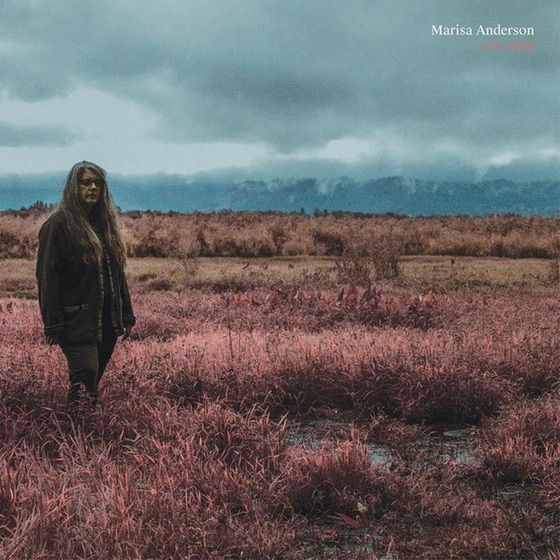
Still, Here emphatically makes the case for Marisa Anderson’s profound
artistry. Anderson is one of the most eminent guitarists working today. Her
lucid, eloquent approach to guitar music and composition has established her
as an unparalleled artist and an insightful, coveted collaborator. As a master
of her instrument, Anderson translates abstractions into undeniably moving
music, tracing through traditional folk tunes, imagined Sci-Fi films, and foggy
sanctuaries of sound.
Anderson’s fluid, eloquent approach to guitar music and composition has
established her as an unparalleled artist and an insightful, coveted collaborator.
Anderson’s work draws on a mosaic of folk musics and lives in conversation
with myriad musical traditions. Her music is inviting and candid, beckoning
the listener into sprawling ecosystems and intimate corners alike, from barren
landscapes to verdant thickets, impassioned communal experiences to pensive
reclusions. As a master of her instrument, Anderson translates abstractions into
undeniably moving music, tracing through traditional folk tunes, imagined SciFi films, and foggy sanctuaries of sound. Still, Here is Anderson at her most
direct, laying bare her practice of processing and understanding the world
through music and distilling that practice into pieces as expressive as they are
transfixing.
The pieces of Still, Here center around Anderson’s present. The album is a
compendium of living moments captured by her preternatural ability to mold
human realities into enduring, lyrical compositions. Away from the road for the
longest stretch of her career, the making of Still, Here affirmed for Anderson
the role of the guitar as an essential tool in processing external and internal
realities. “I don’t get ideas and then turn to the guitar, rather I turn to the guitar
to find out what my ideas are. I turn towards it for meaning.” The discordance
of protest and upheaval emanates from a propulsive acoustic ostinato and
mournful dueling pedal steel guitars on “The Fire This Time,” pausing only to
allow space for the blare of sirens on the Portland street near Anderson’s studio.
“The Crack Where the Light Gets In” rapturously revels in the glimmers of hope
that peek through a pall of darkness. Across Still, Here, Anderson’s playing
transmutes the tributaries of fluctuating emotions into a unified flow, stirring
and sublime.