Αναλυτική Περιγραφή
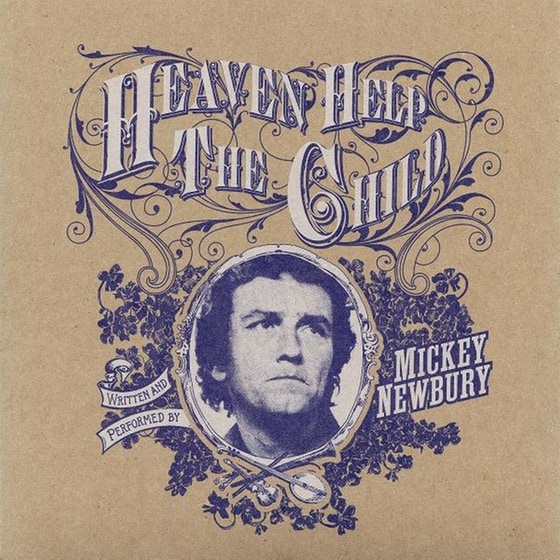
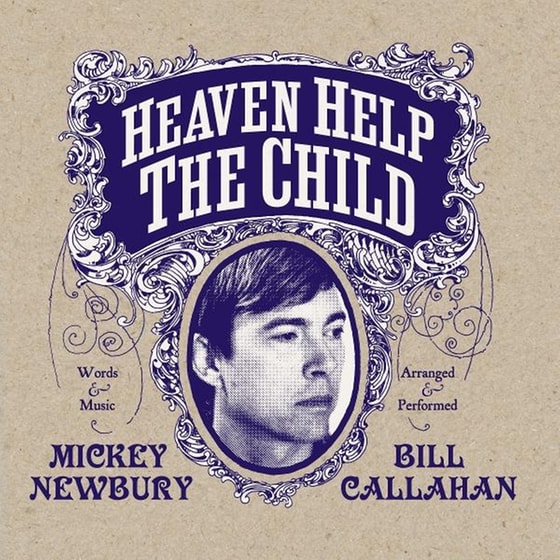
Bill meets Mickey on the street of impossible, unstuck-in-time dreams — as the late Mickey sings his back in '73, while Bill sings his "today." Both these master songsters put their own inevitable brand on Mickey's peerless original, but it's a new thrill hearing Bill cover a tune, something he rarely does. When it comes to the great Mickey Newbury, the answer should always be "yes." Help your own heavenly inner child by picking up and playing the grooves of these two sides of the same story.Mickey Newbury’s An American Trilogy was one of the most talked-about and lauded reissues of 2011 — a long-overdue affirmation for a songwriter and performer who has for years enjoyed cult acclaim but belongs in the ranks of the American greats.Keeping the love alive in ’012, Saint Cecilia Knows and Drag City present a split-single that pairs Mickey Newbury’s recording of “Heaven Help the Child” — the title track of the most refined and under-appreciated album in Newbury’s trilogy — with a new version of the song by Bill Callahan that invokes the stately, elegiac spirit of the original while reworking its intricacies for his own unique voice and style.Callahan has made no secret of his admiration for Mickey Newbury, even name-checking him (alongside George Jones, Kris Kristofferson and Johnny Cash, as part of a roll call of the most American of contemporary songwriter-performers) in the song, “America”, off his acclaimed 2011 album Apocalypse.“There’s something psychedelic and transcendent about Mickey’s best work,” says Callahan, “and when he gets into the realms of songs like “Heaven Help The Child,” where he spans generations and flies over time while still maintaining a singular mind, he’s imparting a truly epic knowledge and vision. The song always reminded me of the movie Once Upon a Time in America.”A wildly-ambitious, cross-generational odyssey, written in 1971 against the backdrop of the waning days of the Vietnam War, “Heaven Help The Child” is the closest Newbury ever came to writing a pure protest song— albeit one that, in true Newbury style, breaks the mold and emotes heartfelt paeans, seeking solutions rather than mere dissent.Allusive, elusive and emotionally direct, the song conflates myth and memoir until the two are inseparable and interchangeable. A reference in the lyrics to Fitzgerald and Hemingway draws on the idea that, for Newbury and his peers, Nashville of the ’70s was like Paris in the ’20s, a meeting place for writers in exile; outsiders working within the mainstream of culture, whose artistic concerns were too epic and personal to be constrained by it.“The point I was trying to make in that song,” said Newbury, “is that every generation thinks that its problems are unique where its problems really are as old as man. There are no new problems; there are only new faces having them.”Mickey Newbury often referred to “Heaven Help The Child” as his “second Trilogy” the first being “An American Trilogy,” the song with which he is most closely-associated yet, paradoxically, did not write. But “Heaven Help the Child” is Newbury through and through: the work of a master songwriter at the height of his powers.